Inviting Your Tiger to Tea - When Ethics Required Action (hero series Part 2)
This article is part of my ongoing series about heroes—not the kind celebrated for titles or platforms, but those whose ethical courage shows up when systems fail.
It follows my earlier piece about David Turner, and continues my reflection on what it really means to live—and lead—according to the Nine Principles of Public Life in Scotland: selflessness, integrity, objectivity, honesty, accountability, leadership, openness, respect, and stewardship.
This piece centres on Tricia McConalogue MBE, a tireless campaigner, professional, and friend, whose life has repeatedly demonstrated that ethics are not abstract—they are practiced, often quietly, often at personal cost.
The Phone Tree: When Systems Were Failing People
In the late 2000s, before smartphones were universal and long before “rapid response” networks became commonplace, there existed a simple but powerful mechanism: a phone tree.
It was used when families—often with children—were being lifted without warning, sometimes at school gates, as part of immigration enforcement tactics that paid scant regard to dignity, proportionality, or human rights.
Tricia and I were part of that phone tree. Its purpose was straightforward: to ensure that someone with authority knew what was happening quickly enough to intervene.
At the far end of that phone tree was Mohammed Sarwar MP, whose intervention—sometimes by phone, sometimes in person at Strathclyde Police Station—helped ensure that human rights were upheld at moments when families were most vulnerable.
Mohammed Sarwar’s public service legacy is now better known to many through his son, Anas Sarwar MSP, who currently serves as Leader of the Scottish Labour Party. I name this not to make a political point, but to locate this story historically and relationally: ethical action does not emerge in a vacuum. It is carried through families, communities, and professional networks over time.
This was not about politics.
It was about intervening when systems lost their moral compass.
It was about professionals—community workers, advocates, public servants—stepping beyond job descriptions to do what ethics required.
Tricia’s Leadership: Ethics Lived, Not Claimed
Tricia’s work, particularly through Bridging the Gap in the Gorbals, consistently centred people who were rendered invisible or inconvenient by institutions.
Refugees were not “cases”.
They were new Gorbalites.
Children navigating stigma, poverty, and postcode discrimination were met with presence, advocacy, and care, not deficit narratives.
Tricia McConalogue MBE is one of my heroes.
Tricia McConalogue MBE is widely known in Glasgow and beyond for her leadership of Bridging the Gap in the Gorbals, and for her long‑standing contribution to anti‑poverty, community development, and human‑rights‑based practice. Her work has included advocacy for asylum seekers, leadership within the Poverty Truth Commission, and a sustained commitment to ensuring that people living in poverty are treated not as problems to be managed, but as citizens whose dignity matters
Her leadership was:
relational, not performative
courageous, not ideological
grounded in humanity, not policy abstraction
And crucially, it aligned—long before I formally worked in regulation—with what we now articulate as the ethical principles of public life.
In Scotland, ethical leadership is not an abstract aspiration. It is codified.
Anyone working in, alongside, or accountable to government or local authorities is required to uphold the Nine Principles of Public Life in Scotland: selflessness, integrity, objectivity, accountability and stewardship, openness, honesty, leadership, duty, and respect. These principles are set out in statute and underpin the ethical standards framework that governs public life in Scotland.
What struck me then—and still strikes me now—is how closely Tricia’s professional practice embodied these principles long before they were widely named or enforced. Her leadership was not performative. It was ethical in the most grounded sense: relational, accountable, and rooted in respect for human dignity.
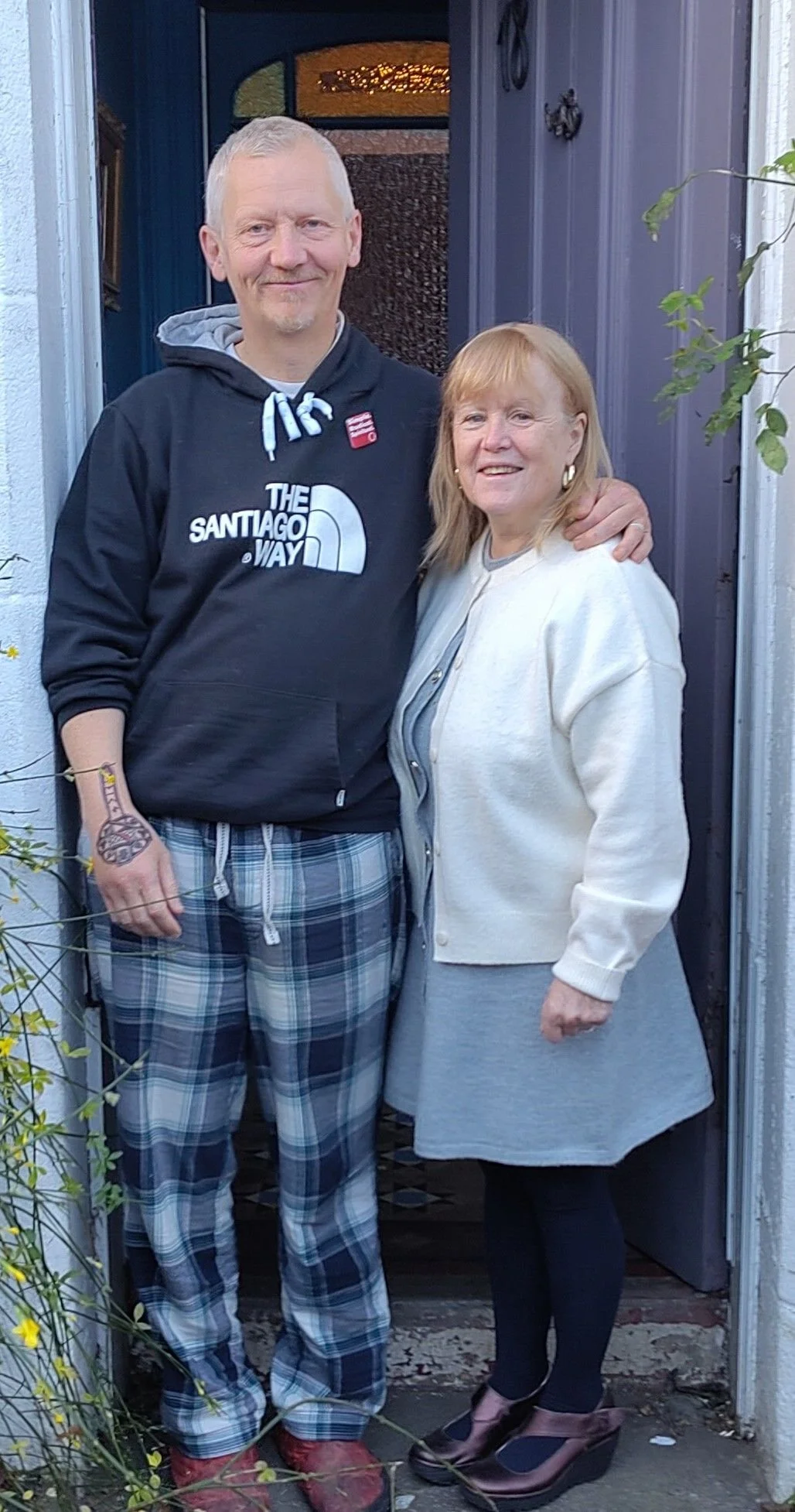
Tricia McConalogue MBE - Ethical Leadership sustained in relationship
Inviting Your Tiger to Tea
I recently invited Tricia to come and stay with me.
There’s a photo from that visit that I’ll include here.
The phrase “Inviting Your Tiger to Tea” matters to me. It’s about hospitality, risk, and courage in relationship. It’s about welcoming complexity rather than avoiding it.
Ethical leadership often asks exactly that of us:
to stay present when things are uncomfortable
to act when silence would be easier
to put relationships before reputation
Why This Matters Now (Without Party Politics)
We are living through a time when systems again risk normalising injustice through process, delay, and dehumanised language.
My call to action here is directed particularly at professionals—those who hold office, exercise authority, or shape systems.
The Principles of Public Life in Scotland are not decorative. They require judgement, courage, and sometimes intervention. They ask us to notice when process obscures harm, when compliance replaces conscience, and when silence becomes complicity.
Tricia’s life reminds me that ethical leadership is rarely convenient. But it is always relational. And it is always a choice.
Tricia remains a tireless campaigner and a friend.
Her life reminds me that ethical practice is not a role—it is a way of being.
If this article resonates, and you want to explore how ethical principles can be lived more fully in professional life, regulation, or leadership cultures, I welcome that conversation.
Be a hero. Often, it starts with answering the phone.