
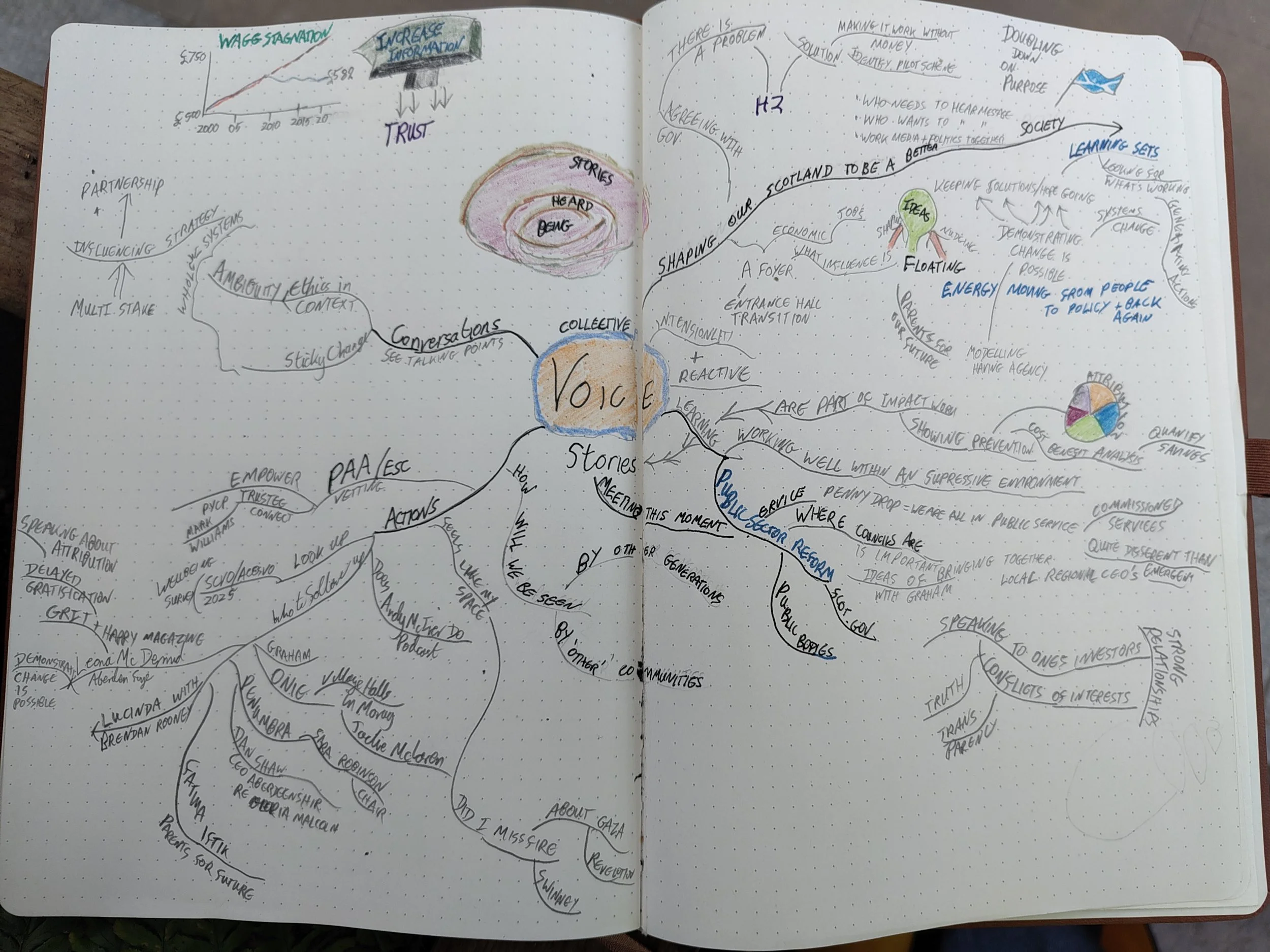
What Holds Steady: Leadership, Faithfulness, and the Work of Accompaniment. This article explores the inner and outer work that leaders are in touch with as necessary in order to influence and have voice in our VUCA contexts.
Read More
What Holds Steady: Leadership, Faithfulness, and the Work of Accompaniment. This article explores the inner and outer work that leaders are in touch with as necessary in order to influence and have voice in our VUCA contexts.
In my experience, there is a significant difference between leading an organisation and leading a leadership team well. This case study shows how deep, system‑psychodynamic team coaching enabled a senior leadership team to work with complexity, share authority, reduce isolation, and lead ambitious cultural and strategic change with greater integrity and impact.
This article is part of my ongoing series about heroes—not the kind celebrated for titles or platforms, but those whose ethical courage shows up when systems fail.
It follows my earlier piece about David Turner, and continues my reflection on what it really means to live—and lead—according to the Principles of Public Life: integrity, accountability, openness, respect, and stewardship.
This piece centres on Tricia, a tireless campaigner, professional, and friend, whose life has repeatedly demonstrated that ethics are not abstract—they are practiced, often quietly, often at personal cost.
Are your staff, or partners heading towards burn out? Are you seeing significant signs of 'Strain Zone' fatigue building up? In this blog i share the insights about being Strategic about your Time and Energy.

Sign up to mailing list using QR code
The goal of my newsletter is to make it easier for you to find articles and resources and help you become more sustainable and ethical in what you do.
It is also a way for you to find out what is on my mind, what I lead on and do in my work, which spans quite a few areas of society and organisational development. My newsletter provides additional insights to what you will find in the articles on my website.
On this page you can search for articles that fit your situation. We use these articles to show how we have applied tools and theories, as well as show the long term sustainable difference this work does in the world.
What Holds Steady: Leadership, Faithfulness, and the Work of Accompaniment. This article explores the inner and outer work that leaders are in touch with as necessary in order to influence and have voice in our VUCA contexts.
Read MoreI offer talks and workshops on the Porty Pals of Palestine twinning journey, using craftivism, story, and shared making. Through films, conversation, and spiritual tent‑peg making, audiences explore ethical leadership, cross‑cultural governance, and how communities move from grief to sustained, peaceful action together with dignity, care, and long‑term solidarity.
Read MoreIn my experience, there is a significant difference between leading an organisation and leading a leadership team well. This case study shows how deep, system‑psychodynamic team coaching enabled a senior leadership team to work with complexity, share authority, reduce isolation, and lead ambitious cultural and strategic change with greater integrity and impact.
Read MoreThis article is part of my ongoing series about heroes—not the kind celebrated for titles or platforms, but those whose ethical courage shows up when systems fail.
It follows my earlier piece about David Turner, and continues my reflection on what it really means to live—and lead—according to the Principles of Public Life: integrity, accountability, openness, respect, and stewardship.
This piece centres on Tricia, a tireless campaigner, professional, and friend, whose life has repeatedly demonstrated that ethics are not abstract—they are practiced, often quietly, often at personal cost.
Read MoreHybrid meetings are still being done badly — not because the technology isn’t there, but because the imagination hasn’t caught up. This article argues that truly inclusive hybrid meetings, designed to work for disabled colleagues and remote participants, are not a compromise but a route to better leadership, better decisions, and better use of everyone’s intelligence.
Read MoreAre your staff, or partners heading towards burn out? Are you seeing significant signs of 'Strain Zone' fatigue building up? In this blog i share the insights about being Strategic about your Time and Energy.
Read MoreHybrid Working is a game changer for culture change in the future of workplaces. This article explains a really useful tool for successful facilitation of deeply difficult issues involving culture change. It offers a way of ‘re-planning your strategy’ and ‘analysing how things go off piste’, A healthy learning culture can be built using this tool.
Read MoreIn my experience there’s a big difference between having a strategy and actually ‘being strategic’. This case case study shows how I’ve helped an organisation make that difference, with the help of my Time & Energy Auditing tools.
Read MoreThis case study shows how culture change is facilitated by properly led and managed consultancy type leadership development programmes. In this case the work I led was transformative, not only helping a hospice build a more resilient workforce, but helping me develop my valuable Time & Energy Audit.
Read MoreAre you leading change well? In these changing times it can be tricky to keep perspective on all the changing factors affecting our work. In this short article i explain the core of change management. This is a good building block for then more complex courses and supervision work i do about leading from the emerging future.
Read MoreThis article is for trustees, Directors, founders, Public Appointees or Ministers of government. Our call to action is simple. Your response to the climate crisis should be a standing item on every boards agenda. You could call the agenda item ‘Code Red for Humanity - our response’, so that you can take behavioural change one meeting at a time.
Read MoreI’ve been using Action Learning for more than 20 years – it’s a powerful and effective approach that knits together the countless individual actions across a group (or groups) into one vast, collaborative effort: harnessing the power of peers to bring about profound change.
Read More